The story
In the spring of 1759 an advertisement in a Frankfurt newspaper promised land, livestock and twenty years free of tax to anyone who would farm the heath of Jutland. This page follows the families who answered it, from the advertisement to the point, about a century later, when their descendants had become Danish.
At a glance
marks events in the Frank and Dürr families.
- Johann Jeremias Thomas Frank is born in Eschelbach in the Kraichgau.
- The crown issues its first ordinance offering privileges to anyone who will cultivate the heath. Few Danes take it up.
- His son Johann Michael Frank is born in Eschelbach.
- Johann Friedrich Moritz, the Danish agent in Frankfurt, signs the recruitment advertisement.
- The first colonists set out on foot from Frankfurt. About six weeks later they reach Fredericia.
- Four more columns, 420 colonists, arrive in Fredericia, probably including the Frank family.
- The first settlers reach Havredal on Alheden. Grønhøj follows on 22 July.
- Cultivation spreads to Randbøl Hede, and colonies are founded in the Duchy of Schleswig.
- Families judged unfit are sent away and many leave, some for Russia. In 1765 about 61 of the original families remain on Alheden.
- Frederiks Church is built for the colonists, two years after they got their own priest.
- Cathrine Barbara Dürr is born on Alheden, the first in the family line born in Denmark.
- A royal commissioner counts 86 farms and about 440 people on Alheden.
- Johann Michael Frank marries Cathrine Barbara Dürr, joining the two colonist families.
- Tree-ring dating puts the Sandkærgård barn in this year. It is the only farm building from the colonists known to survive.
- German stops being the language of the colonists' schools.
- The colonist farmers become freeholders, owning their land.
- German stops being the only language of worship in Frederiks Church in 1856. From 1870 services are held in Danish only.
A kingdom of heath
In the early 1700s much of Jutland was heather. One estimate puts the heath at about a million hectares in 1723, counting the duchies. The crown wanted it farmed, and in 1723 and again in 1751 it offered privileges to anyone who would break the ground: exemption from military service, from billeting soldiers and from transport duties.
Danish farmers were not tempted. The heath was poor, sandy land, and a commission in 1751 even advised against the whole idea. The government decided to look abroad.
The advertisement
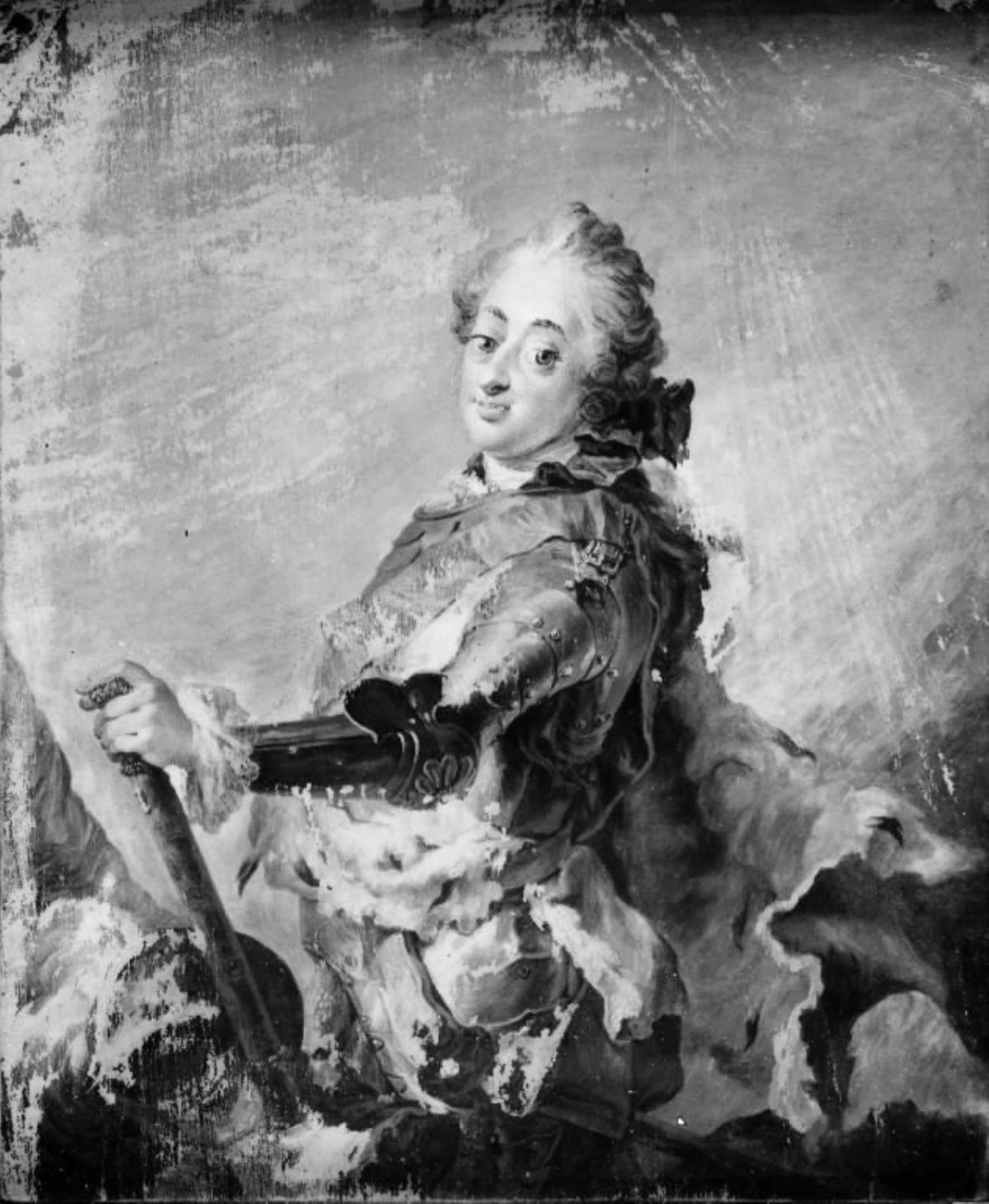
The recruiting was done by Johann Friedrich Moritz, the Danish agent in Frankfurt am Main. His advertisement is dated 18 April 1759 and was printed in a supplement to the Frankfurter Journal on 28 April. The offer was generous on paper: a farm with land, livestock, tools and money, twenty years free of tax, exemption from military service, freedom of religion and help with the cost of the journey.
It reached people at a hard time. The Seven Years' War was being fought across the German lands, and in the Palatinate, Protestants faced religious pressure from a Catholic ruler. Recruiters were active in Hesse-Darmstadt, the Palatinate, Baden-Durlach and Württemberg. Moritz was paid for each emigrant he signed up and took almost anyone, which is one reason many of the colonists turned out to be craftsmen and old soldiers rather than farmers.
The walk north
The colonists gathered in Frankfurt and walked. The first group left on 28 August 1759 and reached Fredericia, in eastern Jutland, about six weeks later. There was nowhere ready for them on the heath, so many spent their first Danish winter in Fredericia, Kolding and Vejle.
More came the next spring. On 1 and 2 May 1760, four columns with 420 colonists arrived in Fredericia. The family historian Henrik Frank believes Johann Thomas Frank, as he is called there, was among them with his wife and children. They were Johann Jeremias Thomas Frank and Eva Magdalena Benz, and one of the children was three-year-old Johann Michael.
Alheden
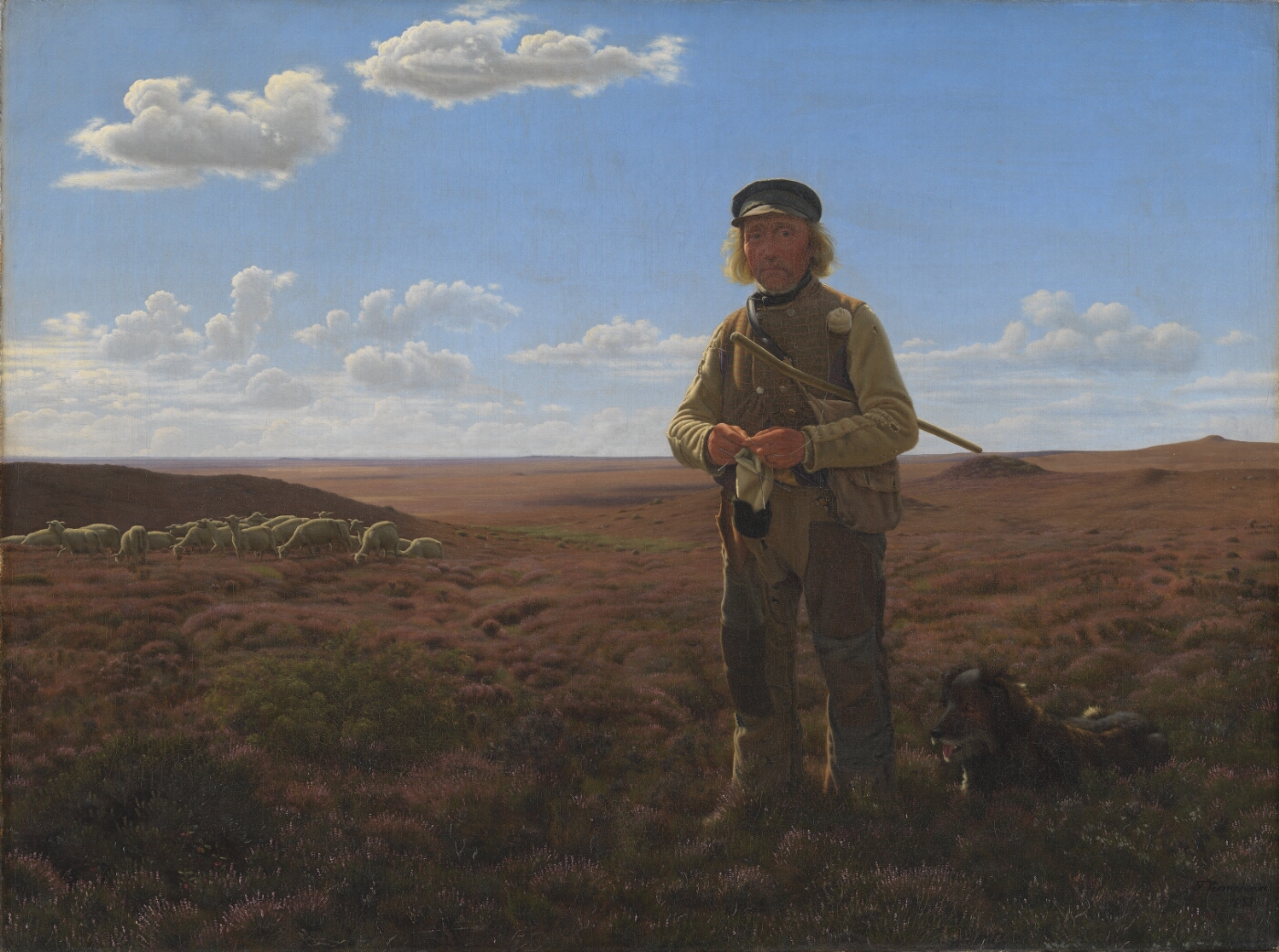
Most of the colonists were settled on Alheden, a long stretch of heath along the Karup river south-west of Viborg. Two new villages were laid out with about thirty farms each. The first settlers reached Havredal on 17 May 1760, and Grønhøj on 22 July. Officially the villages had royal names, Frederikshede and Frederikshøj, but the Danish names stuck. Further south a smaller colony of fifteen farms, Frederiksmose, was built at Gråmose. Johan Jacob Dürr, one of our ancestors, ended his days there.
The first homes were huts built of heather turf. The first proper houses were put up in such a hurry that some of them blew down. By 1762 around a hundred farms had been built on Alheden, and in 1780 a royal commissioner counted 86 farms and about 440 people in 22 small settlements. Other colonists were sent to Randbøl Hede, west of Vejle, where cultivation began in 1761, and others again to new colonies in the Duchy of Schleswig.
Staying and leaving
The heath was as poor as the Danes had said. Grain did badly, many of the promises were slow to arrive, and many of the newcomers had never farmed. Some families were sent away as unfit in 1763. Others gave up and went home, and some moved on to Russia, where Catherine the Great began recruiting German farmers in 1763. By 1765 about 61 of the original families were still on Alheden.
Those who stayed mostly stayed for good. They got their own priest in 1764 and their own church, Frederiks Church, in 1766, standing between Havredal and Grønhøj. Around 1778 some farms moved out of the crowded villages to new sites, which is where place names such as Trehuse, Tohuse and Firehuse ("three houses", "two houses", "four houses") come from.
Why “potato Germans”?
The potato did what grain could not on the sandy soil, and the colonists sold their potatoes at the market in Viborg. That is the most likely origin of the nickname. It is often said that they brought the potato to Denmark, but it was already known here before they came. Historians point instead to the Huguenots, French Protestant refugees who settled in Fredericia around 1720, as more likely early growers. What the colonists did was show that the potato could feed people on the heath. Locals sometimes used the name as an insult. Today it is used without offence, not least by the descendants’ own association.
Becoming Danish
For a long time Alheden was a small German island. Children were taught in German until 1845, and German was the only language in Frederiks Church until 1856. From 1870 services were held in Danish only. In 1852 the colonist farmers became freeholders, owning their land outright, and over the following decades they married into the surrounding Danish families.
Names changed too. In parish registers, German surnames gave way to Danish patronymics, names formed from the father's first name. When Johan Jacob Dürr was buried in 1816, the register called him Jacob Pedersen Döhr, son of Peter. Other names held on: in the 1860 census, Michael Frank's son is still Leonhard Frank, and his children are Franks. Our family page follows one line from the colonists to the early 1900s.
Surnames that stayed
Some colonist names are still common around Alheden. The memorial stone at Frederiks churchyard, raised in 1959, carries about thirty family names. A selection from the sources:
- Agricola
- Betzer
- Bitsch
- Cramer
- Dürr
- Frank
- Herold
- Keller
- Lauth
- Schönheider
- Winkler
- Würtz
- Zimmermann
- Øhlenschlæger
Where the sources disagree
The basic story is well documented, but the numbers vary from source to source. Rather than pick one, here they are side by side.
| Question | What the sources say |
|---|---|
| How many came? | 965 people in 265 families (Wikipedia, Danish Wikipedia); about 290 families (Den Store Danske, Kongenshus); about 300 families (Grænseforeningen). Counting the colonies in Schleswig as well, a German source gives about 1,200 families (Deutsche Kolonisten). |
| How many stayed? | 59 families after 1763; 61 in 1765 (Den Store Danske, Dengang); 53 in the 1765 census (Danish Wikipedia). |
| When did German services end? | German only until 1856 and Danish only from 1870 (Den Store Danske, lex.dk on Frederiks Church). Grænseforeningen gives 1865 and Dengang 1872. |
| Where did they come from? | Mostly the Palatinate and Hesse (Wikipedia, Kongenshus). Henrik Frank writes that those who stayed came almost entirely from the Odenwald north-east of Heidelberg. |
The barn at Sandkærgård
Almost nothing the colonists built is still standing. Apart from Frederiks Church, the only known survivor is a barn from Sandkærgård in Grønhøj. Tree-ring dating places it in 1791, and it was moved to Sandkærgård a few years later. That fits the records, which show five Grønhøj farms moving out to new sites at Benslehøj and Sandkærgårde in 1793.
The archaeologist Rainer Atzbach studied the barn timber by timber before it was rebuilt. The crown had told the colonists to build in the Palatinate manner, but the barn is a single-storey timber frame in the Danish tradition of the time. It even does without a wall plate, the long beam that normally carries the roof, probably because timber was scarce on the heath. Atzbach sees it as a sign of how quickly the newcomers adapted: within a generation they had given up their home villages' way of building, and the village layout too, for scattered farms built the Danish way.
Remembering
The colonists have been remembered at each anniversary. For the 200th anniversary in 1959 a memorial stone was raised at Frederiks churchyard with thirty family names, Dürr, Frank, Kriegbaum, Marcher and Maul among them, and the words Fra fremmed land de kom – og Danmarks sønner blev: from a foreign land they came, and became Denmark's sons. In 1984 Ole Herold's sculpture Kartoffelpigen ("the potato girl") was unveiled at the church. For the 250th anniversary in 2009 a sculpture called Integration was unveiled in Frederiks.
The descendants' association, Kartoffeltyskerne på Alheden, was founded in 1985. One of its projects has been saving the Sandkærgård barn: volunteers took it down, numbered every usable part and rebuilt it at Grønhøj Kro under a roof of heather. See the places you can visit.